San Francisco families should be aware of five main garage door hazards: broken springs, misaligned sensors, frayed cables, outdated openers, and unsecured remotes. Each carries a different level of risk to children, pets, and vehicles.
Recognizing these hazards early is an important first step, and our team at Ace’s Garage Door Repair & Installation regularly helps homeowners identify and address these safety concerns. 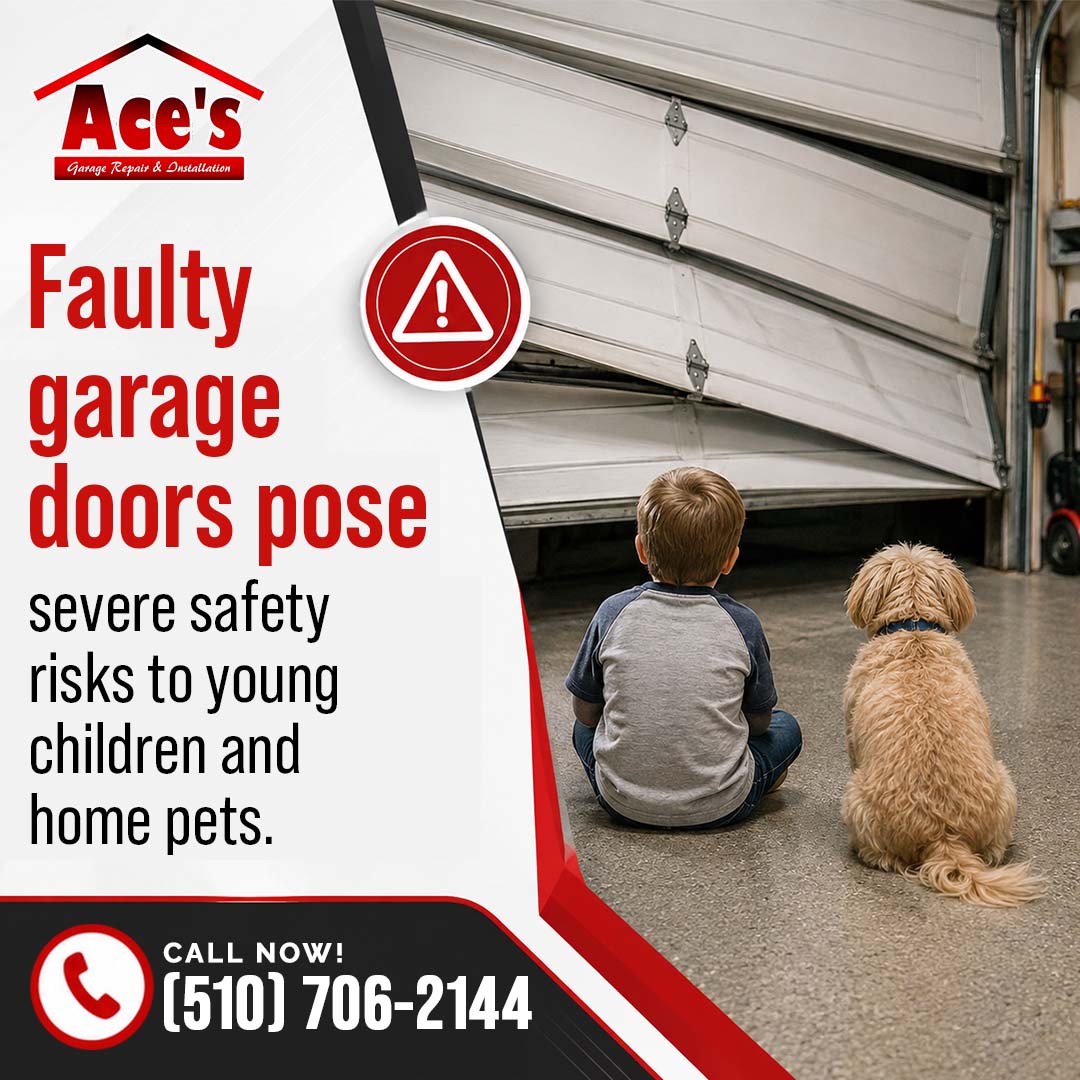
Why Do Garage Door Safety Hazards Matter for Families?
Garage doors are heavy moving systems that can pose serious safety risks if they malfunction or their safety features fail. When a safety feature fails, that weight becomes a real danger to children, pets, and vehicles.
The Consumer Product Safety Commission (CPSC) has documented decades of garage-door entrapment deaths and injuries, highlighting the importance of properly functioning automatic reversing systems for garage-door safety.
For San Francisco homeowners with young kids or aging parents at home, knowing which hazards exist and what they look like matters as much as the fix itself.
What Are the Most Common Garage Door Hazards?
The most common hazards come from mechanical wear, not user error. Springs lose tension over time, sensors drift out of alignment, and cables fray with daily use.
Each of these issues can turn a routine garage door into an entrapment or crushing risk.
- Broken or worn springs: sudden door drops or failure to open
- Misaligned photo-eye sensors: door closes without detecting an obstruction
- Frayed or off-track cables: doors that jam mid-cycle or fall unevenly
- Outdated openers: units made before 1993 often lack auto-reverse technology
- Unsecured remotes: accessible to children, encouraging unsafe play
We see these issues often in our garage door repair service calls across the San Francisco and surrounding Bay areas, and each one carries its own level of risk to a household.
How Serious Is Each Door Hazard?
Not all hazards carry the same level of risk. Comparing them side by side helps families understand what to watch for first.
| Hazard | Risk Level |
| Broken or worn springs | High |
| Misaligned photo-eye sensors | High |
| Frayed or off-track cables | Medium-High |
| Outdated opener (pre-1993) | High |
| Unsecured remote controls | Medium |
Springs, sensors, and outdated openers carry the highest risk because their failure directly affects whether the door stops or reverses on contact.
We provide regular professional garage door repair to help identify and address these safety concerns before they become larger problems.
Which Family Members Face the Highest Risk?
Garage door hazards don’t affect every household member equally. Young children and older adults face the greatest risk, since both groups are more likely to be in the door’s path and less able to react quickly to a malfunction. Pets left in garages during door cycles face similar risk.
This is one reason repair services often get called after a near-miss involving a child or family pet rather than a full accident; the warning sign was there before the incident.
What Warning Signs Should San Francisco Homeowners Watch For?
Most door failures don’t happen without warning. Watching for these signs early can prevent a hazard from becoming an accident:
- Unusual grinding, popping, or scraping noises during operation
- The door closing faster or slower than normal
- Visible gaps, rust, or fraying on cables and springs
- A door that feels uneven or off-balance when opened manually
- Sensor lights that flicker, stay off, or fail to align
Any one of these signs points to a hazard already in progress, not just a future risk. If you notice any of these issues, call us for professional garage door repair in San Francisco to address the problem promptly.
FAQ
How often should a garage door be professionally inspected?
An annual professional inspection can help identify worn or malfunctioning components before they become safety concerns.
Can a garage door be hazardous even if it looks fine?
Yes. Many hazards, such as weakened springs or drifting sensors, aren’t visible until the door fails, which is why warning signs like unusual noise or uneven movement matter more than appearance.
Does homeowners insurance cover garage door accidents?
Coverage varies by policy and cause of damage, so we recommend confirming details directly with your insurance provider.
 Know the Hazards, Protect Your Family
 Know the Hazards, Protect Your Family
Understanding what can go wrong with a door is the first step toward a safer home.
If you’ve noticed any of these signs at home, Ace’s Garage Door Repair & Installation is here to help you get an honest assessment.
Contact our garage door repair company in San Francisco, CA, at (415) 741-5481 or email [email protected] to schedule service and address the issue safely.